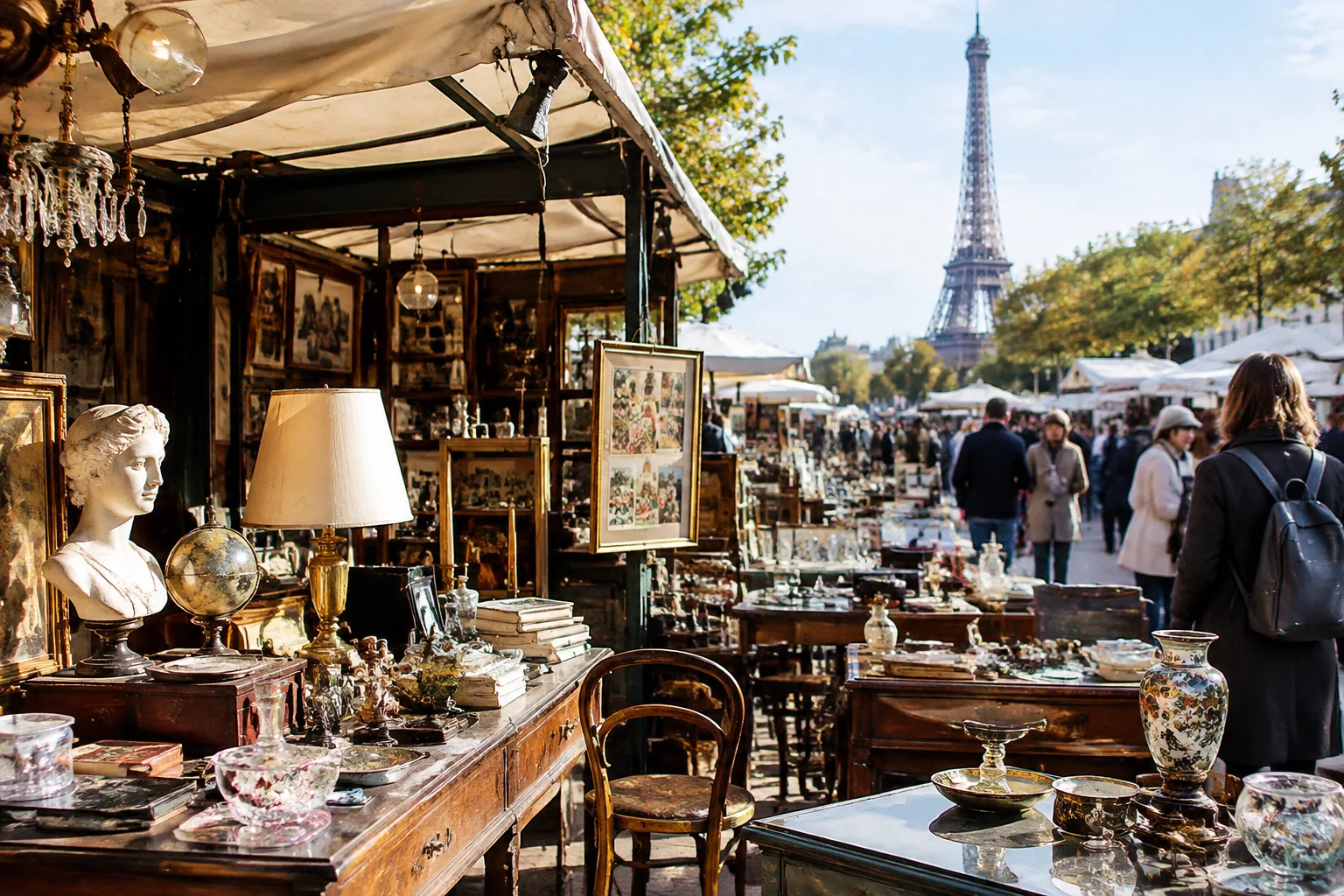
Where can you find a forgotten Art Deco lamp, a 1970s leather jacket, or a postcard that has crossed half a century? The best vintage and flea markets in Paris answer that question every weekend. From the sprawling Puces de Saint-Ouen to the more relaxed stalls of Porte de Vanves, each market has its own personality. I will guide you through the most rewarding places for antiques, fashion, furniture, posters, and curious objects. Bring comfortable shoes, sharp eyes, and enough time for one more stand.
Puces de Saint-Ouen: the essential Paris flea market
If you visit only one flea market in Paris, choose Saint-Ouen. The market spreads across several streets and covered passages north of the city. It feels like a small town devoted entirely to old things. Dealers sell furniture, paintings, ceramics, books, military memorabilia, lighting, jewellery, and clothing.
The area includes several distinct markets. Vernaison offers a charming maze of small stalls and independent dealers. It suits visitors who enjoy browsing at a gentle pace. Dauphine combines antiques with design pieces and collectible objects. Its covered spaces make it useful on rainy days.
For high-end furniture and twentieth-century design, head towards Paul Bert Serpette. You may spot signed lamps, Scandinavian chairs, French ceramics, and rare decorative pieces. Prices often reflect their quality, but window-shopping costs nothing. Biron also focuses on antiques and elegant furniture.
The official Saint-Ouen flea market website lists the different markets and current practical information. Check it before travelling, since opening days vary between areas.
How to explore Saint-Ouen without getting lost
Take Metro line 4 to Porte de Clignancourt, or line 13 to Garibaldi. The walk from Porte de Clignancourt takes several minutes. Follow the signs, then leave the main avenue quickly. The best discoveries often hide behind the busiest entrances.
Allow at least three hours for a first visit. Start with a general walk, then return to the stalls that caught your attention. Photograph labels and prices if a piece interests you. Dealers usually accept polite questions about origin, condition, and delivery.
Saint-Ouen rewards patience. A visitor searching for a particular chair may leave with an old map, a silver box, and a strong opinion about French tableware. That is part of the experience.
Porte de Vanves: the best market for treasure hunters
The Marché aux Puces de la Porte de Vanves offers a more manageable alternative to Saint-Ouen. It takes place along Avenue Marc Sangnier and Avenue Georges Lafenestre, in the fourteenth arrondissement. Dealers set up outdoor stalls, usually on Saturday and Sunday mornings.
This market attracts collectors, local residents, interior designers, and curious travellers. You will find vintage postcards, old photographs, small furniture, mirrors, ceramics, watches, books, prints, and decorative objects. Clothing appears too, although the selection changes from week to week.
Porte de Vanves has a friendly, informal atmosphere. Dealers often know the history of their objects. Some specialise in military items, others in glassware, toys, jewellery, or French advertising. The market remains relatively easy to navigate, even during a busy morning.
Arrive early for the best selection. By late morning, the most unusual pieces may have disappeared into someone else’s shopping bag. Prices vary widely, so compare several stalls before buying. Bargaining remains possible, especially when you purchase more than one item. Keep your tone courteous. Parisian charm works better than aggressive negotiation.
The market lies near Metro line 13, at Porte de Vanves, and Tram line T3a. The City of Paris website provides official information about access and schedules.
Porte de Montreuil: a lively market for affordable vintage finds
East of Paris, the Puces de la Porte de Montreuil offers a rougher, more spontaneous shopping experience. Stalls appear near Avenue de la Porte de Montreuil, close to the périphérique. The market is less polished than Saint-Ouen, which explains its appeal for bargain hunters.
You may find second-hand clothing, trainers, tools, vinyl records, household items, furniture, toys, and assorted bric-a-brac. Stock changes constantly. One visit can bring boxes of old magazines. The next may reveal leather coats, retro sportswear, or a stack of French records.
This market suits visitors who enjoy surprises and do not need a carefully curated atmosphere. Prices can be attractive, but inspect everything closely. Check zips, seams, electrical plugs, glass, and wooden joints. Sellers may know little about an item’s history, so rely on your own judgement.
Take Metro line 9 to Porte de Montreuil. Go in the morning, when the market feels busiest and most interesting. Keep your valuables secure, especially in crowded areas. Porte de Montreuil rewards practical shoppers who enjoy digging through boxes. It rarely rewards people seeking a quiet Sunday stroll.
Village Saint-Paul: antique shopping in the Marais
For a more central experience, explore Village Saint-Paul in the Marais. This group of courtyards sits behind the historic Hôtel de Sully, near the Seine. It houses antique dealers, vintage furniture specialists, galleries, and design shops.
The atmosphere differs from a traditional flea market. You will not find long rows of improvised stalls. Instead, small shops occupy a network of passages and courtyards. Their collections often include mirrors, paintings, ceramics, lamps, clocks, and twentieth-century furniture.
Village Saint-Paul works well on a day devoted to the Marais. Visit the nearby Place des Vosges, then walk towards the shops. The area feels particularly pleasant when the courtyards are open and the weather is mild. Some dealers open irregularly, so expect occasional closed doors.
This is a good place for visitors who want a special decorative object without travelling across Paris. Prices can be higher than at Porte de Vanves. The presentation is more refined, and the pieces often receive careful selection. Ask about restoration before buying furniture or lighting. A beautiful lamp may require more work than its elegant appearance suggests.
Aligre and the Marché aux Puces de la Porte de Clignancourt
The Marché d’Aligre combines food stalls, second-hand goods, antiques, and neighbourhood life. It sits in the twelfth arrondissement, near Place d’Aligre. The covered market sells fresh produce, while outdoor stalls offer books, household objects, old records, and assorted vintage pieces.
Aligre feels local and energetic. Come hungry, because the surrounding streets offer excellent options for a casual lunch. Browse the flea stalls after visiting the food market. The selection remains smaller than at Saint-Ouen, but the setting feels more intimate.
Meanwhile, the area around Porte de Clignancourt offers many second-hand shops and informal stands near the northern entrance to Saint-Ouen. Some visitors stop there and miss the more specialised markets beyond it. Continue walking if you want furniture, design, or serious antiques.
Aligre suits travellers who prefer a neighbourhood market. Saint-Ouen suits those who want a full day of collecting. Both offer strong people-watching, which is free and requires no protective packaging.
Smart tips for shopping at Paris flea markets
Wear comfortable shoes and carry a reusable bag. Cobblestones, narrow passages, and long walks quickly punish elegant but impractical footwear. A small tape measure helps when you shop for furniture. So does a phone charger, especially after photographing dozens of objects.
Ask three simple questions before buying: Where does it come from? How old is it? Has it been repaired? The answers may reveal more than the price tag. For furniture, inspect the back, underside, joints, and hardware. For vintage clothing, check labels, fabric damage, and odours. For ceramics, look for chips and hairline cracks.
Cash remains useful, although many professional dealers accept cards. Keep small notes for modest purchases. Bargain only when the context feels appropriate. A small reduction may work on a group of objects or an expensive piece. Haggling over a few euros can make the conversation awkward.
Think about transport before buying large items. Dealers often arrange delivery in Paris and abroad. Request a written price, including packaging and delivery. For valuable antiques, ask for an invoice and any available provenance. Paris flea markets contain many treasures, but confidence should never replace common sense.
Which Paris flea market should you choose?
Saint-Ouen offers the broadest choice and the richest concentration of professional dealers. Choose it for antiques, design, furniture, and a complete flea-market adventure.
Porte de Vanves suits first-time visitors who want a welcoming and manageable market. It offers excellent variety, especially for small objects, prints, jewellery, and vintage curiosities.
Porte de Montreuil works best for affordable clothing, records, tools, and unpredictable bargains. Expect a lively atmosphere and inspect purchases carefully.
Village Saint-Paul is ideal for elegant antiques and design shops in a central location. Aligre combines vintage browsing with food, cafés, and everyday Parisian life.
For the most rewarding day, visit Porte de Vanves early, then explore a nearby arrondissement. Save Saint-Ouen for a dedicated morning or afternoon. The best vintage and flea markets in Paris rarely reveal everything in one visit. That is their most convincing excuse to return.
Leave a Reply