What should you see first inside the Musée d’Orsay when hundreds of masterpieces compete for your attention? This former railway station can feel overwhelming, especially during a first visit. I have explored its galleries many times, and I still find new details in familiar paintings. This guide focuses on the essential artworks, the smartest route, and practical advice for enjoying the Orsay Museum without rushing. You will discover where to find Monet, Van Gogh, Degas, Renoir, Manet, and several surprises along the way.
Why the Musée d’Orsay deserves a place on your Paris itinerary
The Musée d’Orsay occupies a magnificent former railway station beside the Seine. Its enormous clock, curved roof, and elegant iron structure immediately set it apart from Paris’s traditional museums. The building opened as a railway station for the 1900 Universal Exhibition. It later became one of the world’s finest museums dedicated to Western art.
The collection covers roughly 1848 to 1914. This period includes Realism, Impressionism, Post-Impressionism, Symbolism, and Art Nouveau. The museum brings together painting, sculpture, photography, decorative arts, and architecture. That variety makes the visit feel more like a journey than a simple gallery tour.
Most visitors come for the famous paintings. However, the building itself deserves attention. Stand in the central nave and look upward. The vast clock, the glass roof, and the perspective towards the sculptures create one of Paris’s most memorable interiors. Arrive early, and the station’s former grandeur feels wonderfully spacious.
The must-see paintings at the Musée d’Orsay
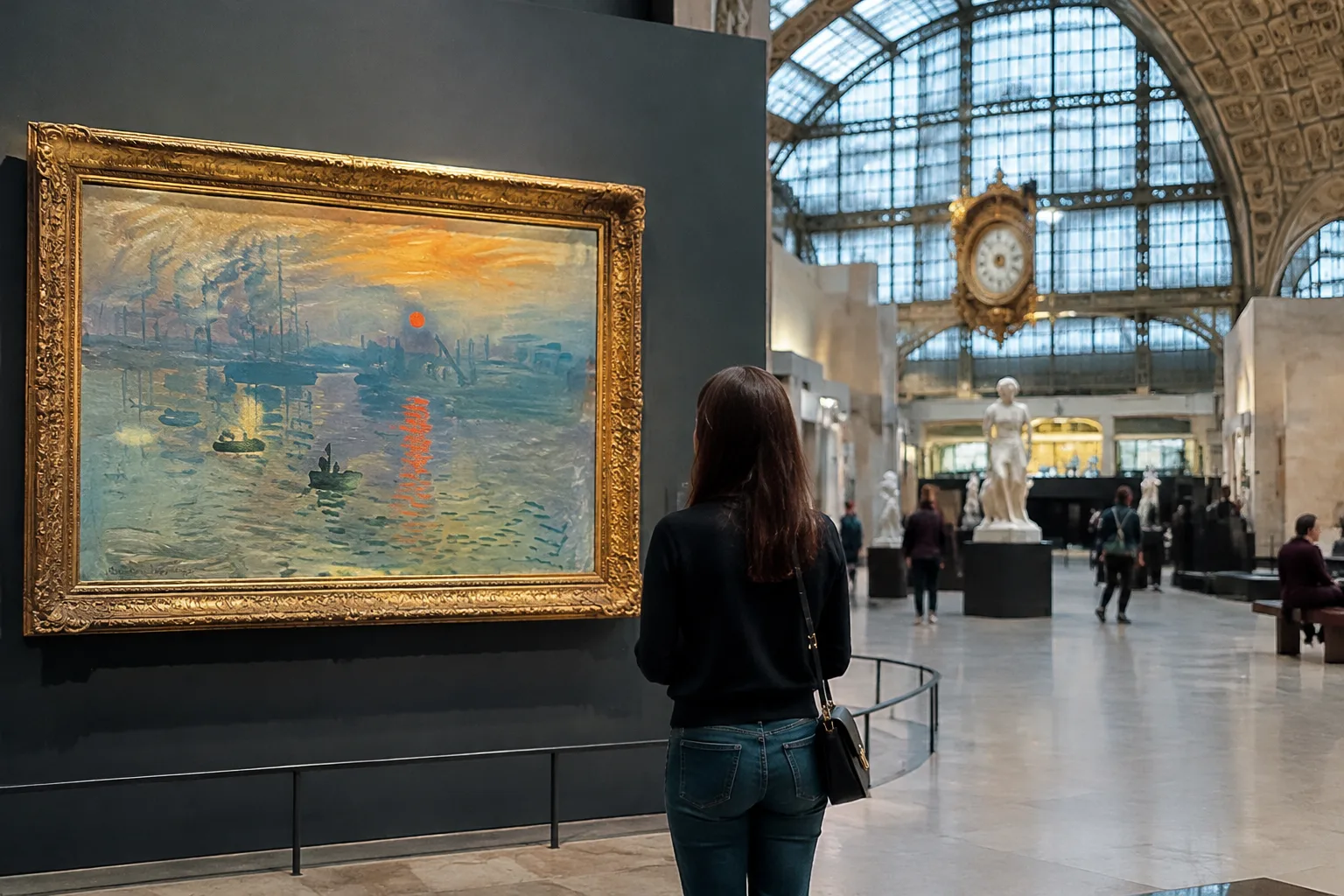
Start with Claude Monet’s Impression, Sunrise. This small painting gave Impressionism its name. Monet painted the port of Le Havre with loose brushstrokes, pale mist, and a vivid orange sun. The scene looks simple at first. Then the atmosphere begins to shimmer. It remains one of the museum’s essential works.
Edouard Manet’s Olympia usually attracts a crowd. Its direct gaze and bold composition shocked Parisian audiences in 1865. Manet challenged the polished conventions of academic painting. The black cat, the servant, and the contrasting flowers add tension to the scene. Give yourself time to observe the painting’s unusual balance of colour and attitude.
Degas offers a different kind of drama. His Little Dancer Aged Fourteen stands among the museum’s most recognisable sculptures. The wax figure wears a real fabric costume and a satin ribbon. Her posture appears casual, yet her expression remains difficult to read. Nearby, Degas’s ballet scenes reveal his fascination with movement, repetition, and the hard work behind elegant performances.
Look for Renoir’s Bal du moulin de la Galette. Its dancers fill a Montmartre garden with sunlight, conversation, and movement. Renoir captures faces and shadows through vibrating touches of colour. The painting feels crowded, but never chaotic. It offers a vivid glimpse of Parisian leisure during the late nineteenth century.
Van Gogh’s paintings provide some of the museum’s most emotional moments. Starry Night Over the Rhône glows with blue water, gaslight, and a richly coloured sky. His self-portraits show another side of his work. The brushwork feels direct and restless. Do not hurry past them. Van Gogh rewards close viewing, especially when you examine the paint’s thick, visible texture.
More masterpieces worth seeking out
Many first-time visitors focus only on Impressionism. That would mean missing some exceptional works. Gustave Courbet’s The Artist’s Studio presents a crowded allegory of his artistic world. The figures surrounding Courbet include friends, critics, and symbolic characters. Its unusual scale and complicated message make it one of the museum’s most intriguing paintings.
Jean-François Millet’s The Gleaners presents three rural women collecting leftover grain. Their monumental scale gives dignity to a difficult task. The painting caused debate when it appeared in 1857. Its social message remains clear, but Millet also gives the landscape a powerful visual structure.
James McNeill Whistler’s Arrangement in Grey and Black No. 1, better known as Whistler’s Mother, looks restrained and almost severe. Its simple composition became an icon of American art. Nearby, Symbolist and Art Nouveau works introduce darker colours, decorative lines, and dreamlike subjects.
Do not overlook the sculpture galleries in the central section. Rodin’s figures often show bodies caught between movement and stillness. Camille Claudel’s sculptures bring remarkable sensitivity to hands, faces, and gestures. The spacious layout allows you to compare different approaches to the human form.
Before your visit, browse the official Musée d’Orsay collection. Select a few works that genuinely interest you. A personal shortlist works better than trying to see everything.
How to plan your first Musée d’Orsay visit
Allow at least two and a half hours for a first visit. Three hours feels more comfortable if you enjoy painting or sculpture. The museum is large, but its layout remains easier to understand than the Louvre’s. The main galleries occupy different levels around the central nave.
Check the museum’s official website before travelling. Opening hours, ticket rules, temporary exhibitions, and access arrangements can change. The museum generally closes on Mondays and often opens later on Thursday evenings. Always verify the current schedule through the official visitor information page.
Booking a timed ticket online usually saves valuable time. This matters particularly during weekends, school holidays, and summer. Keep your ticket accessible on your phone. Security checks can create queues even when the galleries remain calm.
Try to arrive shortly after opening. Another good option is Thursday evening, when the museum usually stays open later. Weekday mornings offer the quietest experience. Avoid building your entire visit around one painting. Galleries sometimes close temporarily during loans, maintenance, or exhibition changes.
A clever route through the museum
Begin on the upper level, where the Impressionist and Post-Impressionist galleries usually attract the largest crowds. Seeing the highlights early lets you enjoy Monet, Renoir, Degas, and Van Gogh with more space. Gallery arrangements can change, so follow the current signs rather than relying on an old map.
After the Impressionist rooms, descend gradually through the museum. Explore the earlier nineteenth-century paintings, including Realism and academic art. This order helps you understand how artists moved from official traditions towards modern visual language.
Return to the central nave for the sculptures. Take a short pause beneath the great clock. From the upper levels, the clock also offers a superb view across the interior. It is one of the best spots for a photograph, although tripods and professional equipment may require permission.
Keep the final part of your visit flexible. Choose one room you enjoyed and revisit it. A second look often reveals details missed during the first pass. Museums reward curiosity more than endurance. Your feet will appreciate this approach too.
Practical tips for a smoother experience
Wear comfortable shoes. The galleries involve more walking than many visitors expect. Large bags and backpacks may need to enter the cloakroom. Travel light whenever possible, especially during busy periods.
Photography is generally allowed for personal use, but flash and selfie sticks can disturb other visitors. Respect barriers around the artworks. A museum guard may appear with impressive speed if your phone gets too close to a painting.
The Musée d’Orsay offers lifts and accessible routes. Visitors with mobility requirements should consult the official access information before arrival. Staff members can help with practical questions inside the museum. Families should also check current activities for children, as the programme changes regularly.
Do not plan a heavy lunch before the visit. The museum’s restaurant occupies a spectacular historic setting, with ornate decoration and a large dining room. It can make a memorable pause, especially during a rainy afternoon. The café is more suitable for a quick break.
The museum sits near several excellent Paris walks. After your visit, cross towards the Tuileries Garden or follow the Seine towards Saint-Germain-des-Prés. The Musée de l’Orangerie lies nearby, while the Louvre stands across the river. This location makes the Orsay Museum easy to combine with a broader day in central Paris.
The best way to enjoy the Musée d’Orsay
Choose a few masterpieces, then allow the museum to surprise you. The famous names provide an excellent starting point, but lesser-known paintings often become personal favourites. Look at the colours, the faces, and the tiny details. Read the labels, but trust your own reactions too.
My favourite strategy remains simple: arrive early, visit the top-floor highlights first, and slow down afterwards. Leave enough time for the architecture, the sculpture, and the views through the clock. The Musée d’Orsay offers one of Paris’s richest cultural experiences in a wonderfully compact setting.
When you finally step outside, the Seine and the grand façades of the Left Bank wait nearby. Paris continues the museum’s story in the streets, cafés, bridges, and gardens. That is the perfect moment for a coffee and a little artistic confidence.
Leave a Reply