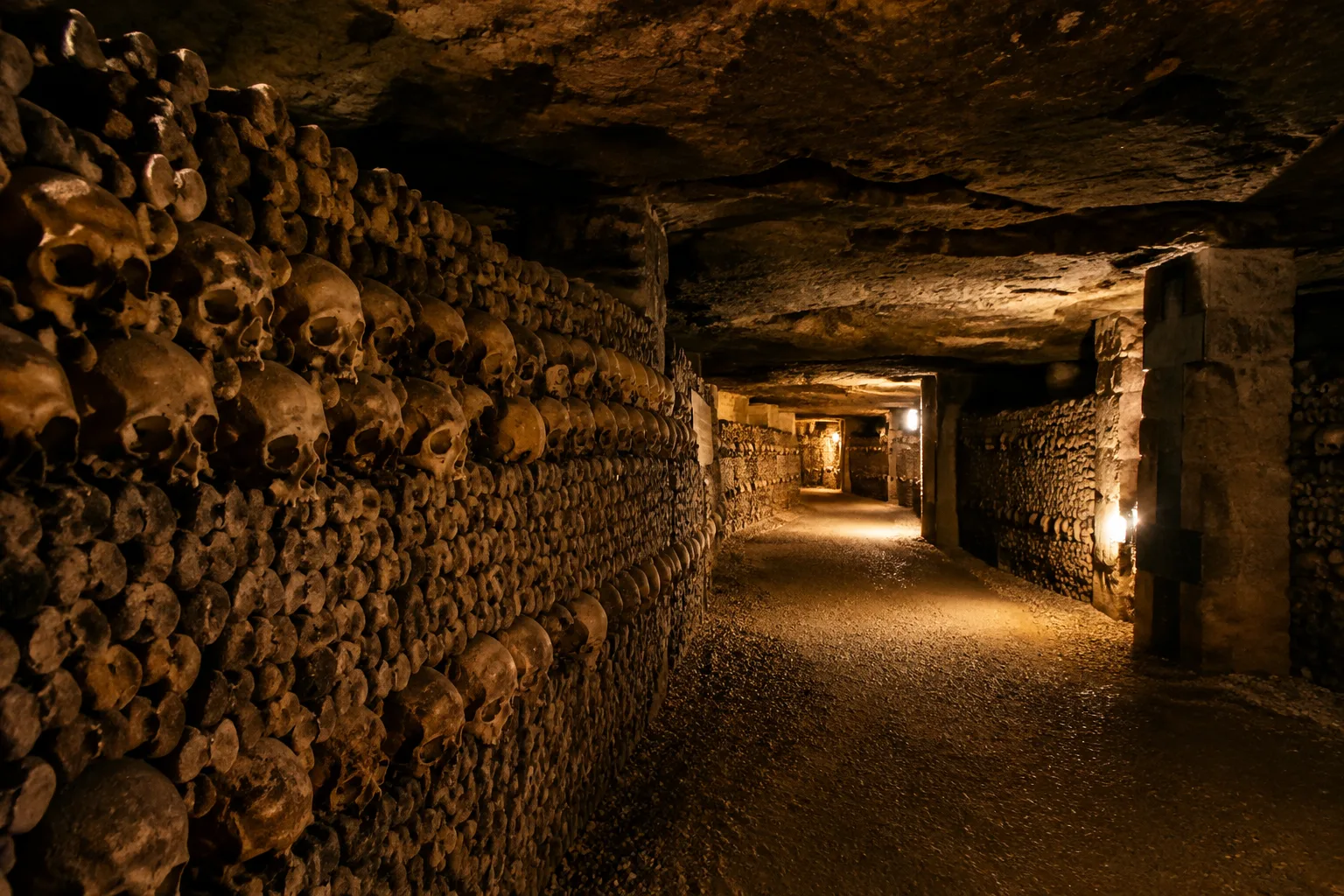
Why do the Paris Catacombs remain one of the capital’s most fascinating attractions? Beneath busy cafés and elegant boulevards lies a vast underground ossuary, built from the bones of millions of Parisians. A visit combines urban history, engineering and a distinctly eerie atmosphere. In this guide, I explain how to book Paris Catacombs tickets, what happened beneath the city, how long the tour takes, and which practical details can make or break your experience. Bring comfortable shoes, a steady head and a little curiosity. The descent begins at Denfert-Rochereau.
What are the Paris Catacombs?
The Paris Catacombs are an underground ossuary in the city’s former limestone quarries. They hold the remains of approximately six million people. Their bones came from overcrowded cemeteries across Paris, especially the Cemetery of the Innocents near Les Halles.
The official visitor route covers around 1.5 kilometres. It lies roughly 20 metres below street level. The path passes through narrow tunnels, carved galleries and rooms lined with carefully arranged bones. The atmosphere feels solemn, but the site also reveals an extraordinary chapter of Parisian planning.
This attraction is smaller than many visitors expect. It is not an endless underground city open in every direction. The public route follows a controlled circuit, designed to protect both visitors and the fragile historic site.
The visit usually lasts about 45 minutes to one hour. Allow extra time for security checks, the staircase and the area around the entrance. The exit is several streets away from the entrance, close to Avenue René-Coty.
Paris Catacombs history: from quarries to ossuary
Paris grew above a network of ancient limestone quarries. Builders used this stone for monuments, churches and houses. Over time, these underground galleries weakened parts of the city. The authorities began mapping and reinforcing them during the eighteenth century.
At the same time, Parisian cemeteries created a serious public-health problem. The Cemetery of the Innocents had received bodies for centuries. It stood in a densely populated neighbourhood and had become dangerously overcrowded.
In 1785, officials decided to close the cemetery. The authorities transferred the bones to former quarries outside the city centre. The first transfer took place in 1786, after the site received a religious blessing. Further transfers continued for several years.
Later, the city moved bones from other cemeteries. The process continued into the nineteenth century. Workers arranged many remains into decorative walls, while other bones remained in piles behind them.
The entrance inscription sets the tone: “Arrête! C’est ici l’empire de la mort”. In English, it reads, “Stop! Here is the empire of death.” It may sound theatrical, but the underground setting gives the words real force.
You can explore the broader background through the official Paris Catacombs website. It includes practical information and historical context from the City of Paris.
Paris Catacombs tickets: how to book the right visit
Timed tickets are the safest option. The Catacombs attract large crowds, particularly during weekends, school holidays and summer. Online booking lets you choose a specific entry time and avoid an uncertain wait outside.
Book through the official website or the official Paris Museums ticketing platform. Prices can change, especially when the city updates admission options or audio-guide packages. Check the current rate before payment rather than trusting an old travel blog.
Several ticket types may appear. The standard admission covers the permanent visitor route. Some options include an audio guide or offer a reduced price for eligible visitors. Children, young adults and holders of certain passes may benefit from special conditions.
Keep your confirmation accessible on your phone. A screenshot helps if the underground signal disappears. Arrive around 15 minutes before your time slot. Late arrivals may lose access, especially when the next group has already entered.
Tickets purchased from unofficial resellers can cost more. Some also include unclear cancellation policies. For reliable information, consult the Paris Musées official website before booking.
Can you buy tickets at the entrance?
On-site ticket sales may exist when availability permits. However, they are not a sensible strategy during busy periods. The daily capacity remains limited, and popular time slots disappear quickly.
Walk-in visitors may face a long wait or find the day fully booked. This is particularly common between April and October. Reserve online if the Catacombs form an important part of your Paris itinerary.
Opening hours, location and access
The Paris Catacombs entrance stands at 1 Avenue du Colonel Henri Rol-Tanguy, 75014 Paris. The nearest landmark is Place Denfert-Rochereau, a lively transport hub in the fourteenth arrondissement.
Metro lines 4 and 6 stop at Denfert-Rochereau. The RER B also serves the station, making the attraction easy to reach from Charles de Gaulle Airport. Several buses stop nearby.
The Catacombs generally open from Tuesday to Sunday. They usually close on Mondays and certain public holidays. Opening times can change because of maintenance, special events or operational constraints.
Check the official schedule before travelling. Aim to arrive early enough for the entrance procedure. The surrounding square offers cafés and shaded areas, but the attraction itself cannot always absorb early visitors immediately.
The route begins with a descent of approximately 131 steps. Visitors climb around 112 steps at the end. There is no lift for the standard route. The exit staircase feels demanding after walking underground, particularly during a hot day.
What to expect inside the ossuary
The first part of the route follows former quarry passages. Interpretive panels explain the geology, the construction of Paris and the creation of the ossuary. You then reach the galleries containing the human remains.
The bones form disciplined patterns rather than random heaps. Skulls and long bones create walls, geometric designs and solemn displays. The arrangement reflects nineteenth-century ideas about order, morality and public presentation.
The lighting remains low. The air feels cool and damp, even during summer. The passageways can become crowded, so visitors move at a steady pace. Stop only where the route allows it.
Photography is generally permitted for personal use, but flash photography can disturb other visitors. Tripods and professional equipment may require authorisation. Follow staff instructions and avoid touching the walls or bones.
The Catacombs are a memorial site, not a horror attraction. Quiet behaviour matters. Jokes, posed selfies and loud conversations quickly feel inappropriate in such a setting. Paris offers plenty of places for theatrical photographs above ground.
Essential visiting tips for a comfortable experience
Wear shoes with a firm grip. The floor may feel uneven, and some areas can become slippery. Sandals and thin dress shoes are poor companions for the staircase.
Bring a light layer. The temperature underground stays close to 14°C. A cool tunnel feels pleasant in August, but uncomfortable if you arrive in summer clothes and linger.
Travel light. Large luggage, bulky backpacks and oversized bags may be refused. The Catacombs do not offer a convenient cloakroom for every type of item. Check the current baggage rules before leaving your hotel.
Do not bring food or drinks into the ossuary. Keep your phone charged, especially if you use a digital ticket or an audio guide. Mobile reception can be unreliable below street level.
Visitors with claustrophobia should think carefully before booking. Some tunnels are narrow, dark and enclosed. The route is manageable for many people, but it offers no quick shortcut to the exit.
Allow more time if you travel with children. The stairs and atmosphere may surprise younger visitors. Children need close supervision, particularly in crowded passages. The site’s age recommendations and admission rules can change, so check them before booking.
Accessibility and restrictions to know
The standard Catacombs route is not wheelchair accessible. It includes long staircases, uneven surfaces and narrow underground passages. Visitors with reduced mobility should contact the attraction before planning a visit.
The underground environment may also challenge people with respiratory conditions. Dust, humidity and limited ventilation can affect sensitive visitors. Ask a medical professional if you have concerns.
Pets are not normally allowed, apart from assistance dogs. Large bags, hazardous objects and certain professional equipment are restricted. Security checks take place before the descent.
Photography for commercial purposes requires prior permission. The Catacombs are protected heritage, and staff enforce rules to preserve the site. These restrictions may feel strict, but they help protect a fragile and irreplaceable place.
Where to go after the Paris Catacombs
Denfert-Rochereau makes a useful base for exploring southern Paris. After the visit, walk towards the Luxembourg Gardens through quiet streets and residential avenues. The contrast feels refreshing after the underground galleries.
You can also visit the Fondation Cartier nearby. Its contemporary exhibitions occupy a striking glass building surrounded by trees. Montparnasse lies a short distance away, with cafés linked to the city’s artistic history.
For lunch, explore the streets around Rue Daguerre. This lively market street offers bakeries, cheese shops, restaurants and terraces. It gives the neighbourhood a local rhythm that many central Paris districts have lost.
The Catacombs work best as a focused visit rather than a rushed stop between major monuments. Book a morning slot, walk through the fourteenth arrondissement, then continue towards Montparnasse or the Luxembourg Gardens.
Above all, give the place the attention it deserves. Beneath Paris, the city’s history becomes physical, crowded and impossible to ignore. That is what makes the Catacombs memorable long after you climb back into daylight.
Leave a Reply