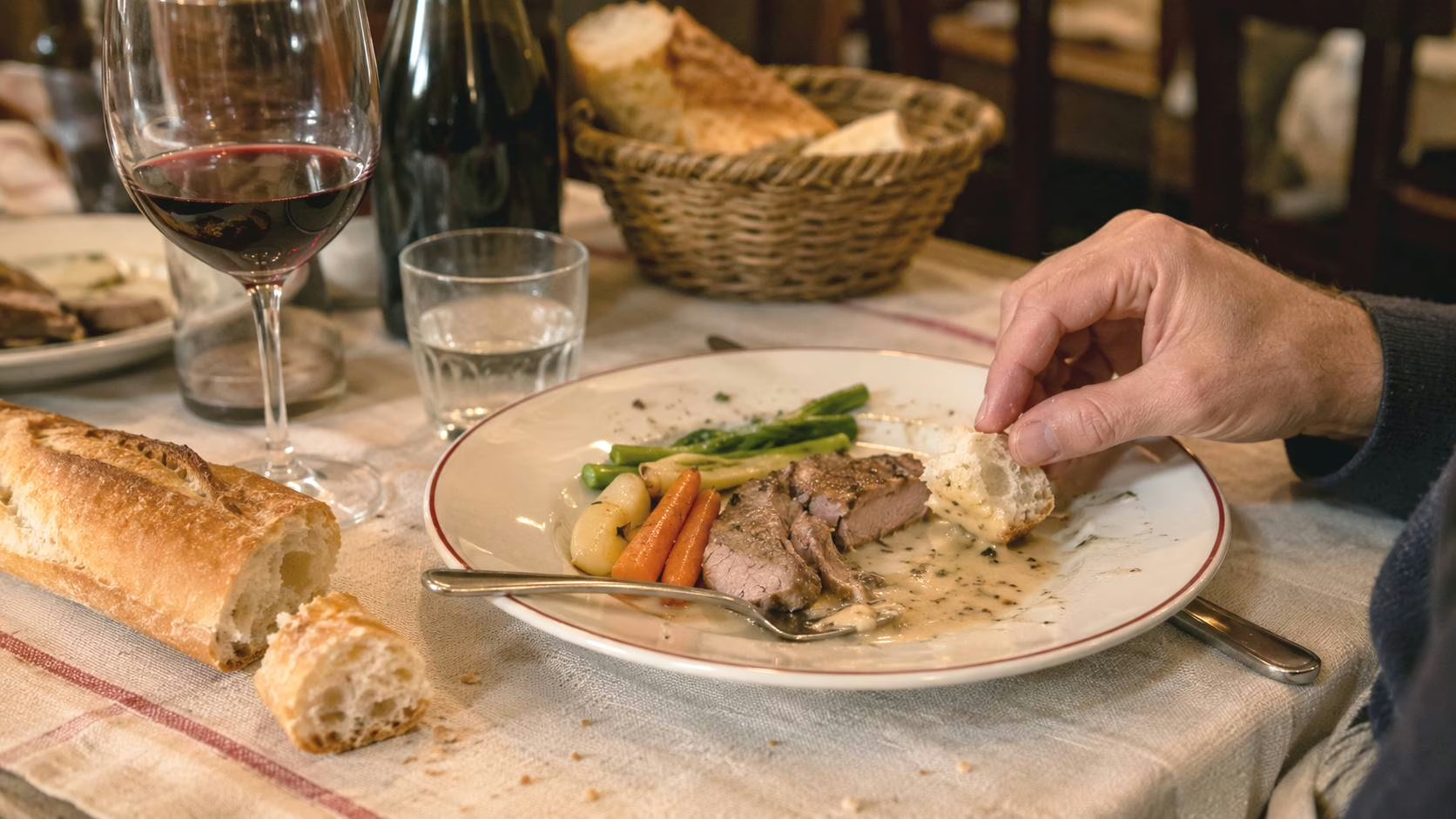
Foreign visitors to France often arrive prepared for the famous dining rituals: the cheese course before dessert, the unhurried meal, the small coffee served at the end, the mysterious confidence with which everyone seems to know which fork to use. They may even be ready to eat pizza with a knife and fork. But one of the French eating customs that surprises foreigners most is quieter, humbler and far more revealing: the way bread is treated at the table.
In many countries, especially in upscale restaurants in New York or London, bread arrives with its own small plate, perhaps accompanied by a neat curl of butter and a dedicated butter knife. In France, things are different. Bread is usually placed directly on the table, next to the main plate. No bread plate. No ceremony. No apology.
At first, this can feel slightly shocking. Isn’t the tablecloth supposed to stay clean? What about the crumbs? In France, crumbs are simply part of the meal (yes!). They are expected, tolerated and swept away before dessert if necessary. The bread is not an accessory placed at a polite distance from the food. It is part of the table itself.
This small detail says a great deal about French food culture.
Bread is not just a side dish
First, bread is so important that many people get their opipnion of the resturant by taking a look at the bread. CHoosing the right kind of bread says much about the owner and the cook.
But the key insight here is to undesrtand that in France, bread is rarely treated as something to eat separately before the meal. It is not meant to be consumed in large quantities while waiting for the starter to arrive. Foreigners who sit down in a French restaurant and immediately ask for bread and butter may not be committing a crime, but they are quietly revealing themselves as tourists.
French bread belongs to the meal. It accompanies the food, balances flavours, helps with texture and, above all, makes sure no good sauce is wasted. It is less a side dish than an edible utensil.
That is why its place on the table makes sense. The bread sits close to the diner’s hand, ready to be torn, used, dipped, pushed or politely deployed in the small choreography of eating.
The art of tearing, not biting
One of the first rules foreigners notice is that French diners rarely pick up a whole slice or chunk of bread and bite directly into it. Instead, they tear off a small piece, just enough for one bite.
This may seem like a tiny distinction, but it changes the entire rhythm of the meal. Bread is not devoured. It is portioned, almost discreetly. A small piece is torn off, eaten with cheese, used with sauce or held in the hand while eating the main course.
The gesture is practical, but it also reflects a broader French approach to meals: food is structured, sequenced and shared according to habits that are learned early. There is a way of doing things, even when nobody formally explains it.
Bread as a “pusher”
Another habit that surprises many foreigners is the way bread is used to help food onto the fork. A small torn piece of bread may be held in the left hand and used to guide a few runaway vegetables, grains of rice or pieces of meat onto the fork.
This is sometimes called the “pusher” method. It is simple, efficient and very French. Instead of chasing food around the plate with the fork alone, the diner uses bread as a discreet assistant.
This also explains why bread is placed directly beside the plate. It needs to be available throughout the meal. It is not waiting in a separate dish like an ornamental extra. It is working.
The sacred pleasure of “saucer”
Then comes one of the great pleasures of French dining: saucer.
Saucer means using bread to wipe up the remaining sauce, dressing or juices left on the plate. It is one of those customs that sits between etiquette and appetite. Everyone understands the temptation. After all, if the sauce is good, leaving it behind feels almost rude to the cook.
In a casual setting, it is perfectly acceptable to tear off a small piece of bread and use the fingers to wipe the plate. At home, in a bistro or among friends, nobody will faint.
In more formal restaurants, however, things are slightly more restrained. Spearing the bread with a fork to wipe up the sauce is considered more elegant. Using fingers in fine dining can look too rustic, even if the instinct itself is deeply understandable. French etiquette often works like this: the pleasure is allowed, but the method must suit the setting.
Why there is usually no butter
Another surprise for foreigners is the absence of butter with bread at lunch or dinner.
In many countries, bread and butter are almost inseparable. The butter arrives automatically, often before the meal. In France, this is not the norm. Bread served with lunch or dinner is usually plain. It is there to accompany the dish, not to become a course in itself.
Butter has its place, of course. It belongs at breakfast, often with jam on a baguette or tartine. It may also appear in specific culinary contexts, such as with raw radishes or oysters. But a basket of bread and a dish of butter before a meal? That is not the classic French habit.
This distinction is important. French meals tend to be built in courses, each with its own function. Bread is present throughout, but it does not replace the starter. It supports the meal rather than stealing attention from it.
A clue to the structure of French meals
Bread also reveals something about the French love of separate courses.
Foreigners often notice that French meals are more sequenced than meals in many other cultures. A starter comes first. Then the main course. Then, perhaps, cheese. Then dessert. The salad may arrive at a specific moment. Coffee comes after dessert, not with it. Everything has its place.
Bread moves through these courses like a quiet companion. It can help with the starter, accompany the main dish, become essential with cheese and disappear before dessert. It adapts without ever becoming the centre of attention.
This is why bread is so deeply embedded in French eating customs. It is both modest and indispensable. It supports the order of the meal without needing its own spotlight.
The tablecloth tells the truth
For foreigners, the lack of a bread plate may seem like a small oddity. But it captures something essential about French dining: food customs are not always about formality. Sometimes they are about function, habit and a shared understanding of how a meal should unfold.
The bread goes on the table because everyone knows what it is for. It will be torn, not bitten whole. It will help food onto the fork. It will soak up sauce. It will accompany cheese. It will leave crumbs. And then the crumbs will be swept away.
In that sense, the French table is not less refined because the bread touches the cloth. It is refined in a different way. The elegance lies not in extra plates and special knives, but in knowing how to use a simple piece of bread properly.
A baguette on the table may look casual. In France, it is anything but accidental.
Enjoy your bread!
Christophe
Leave a Reply