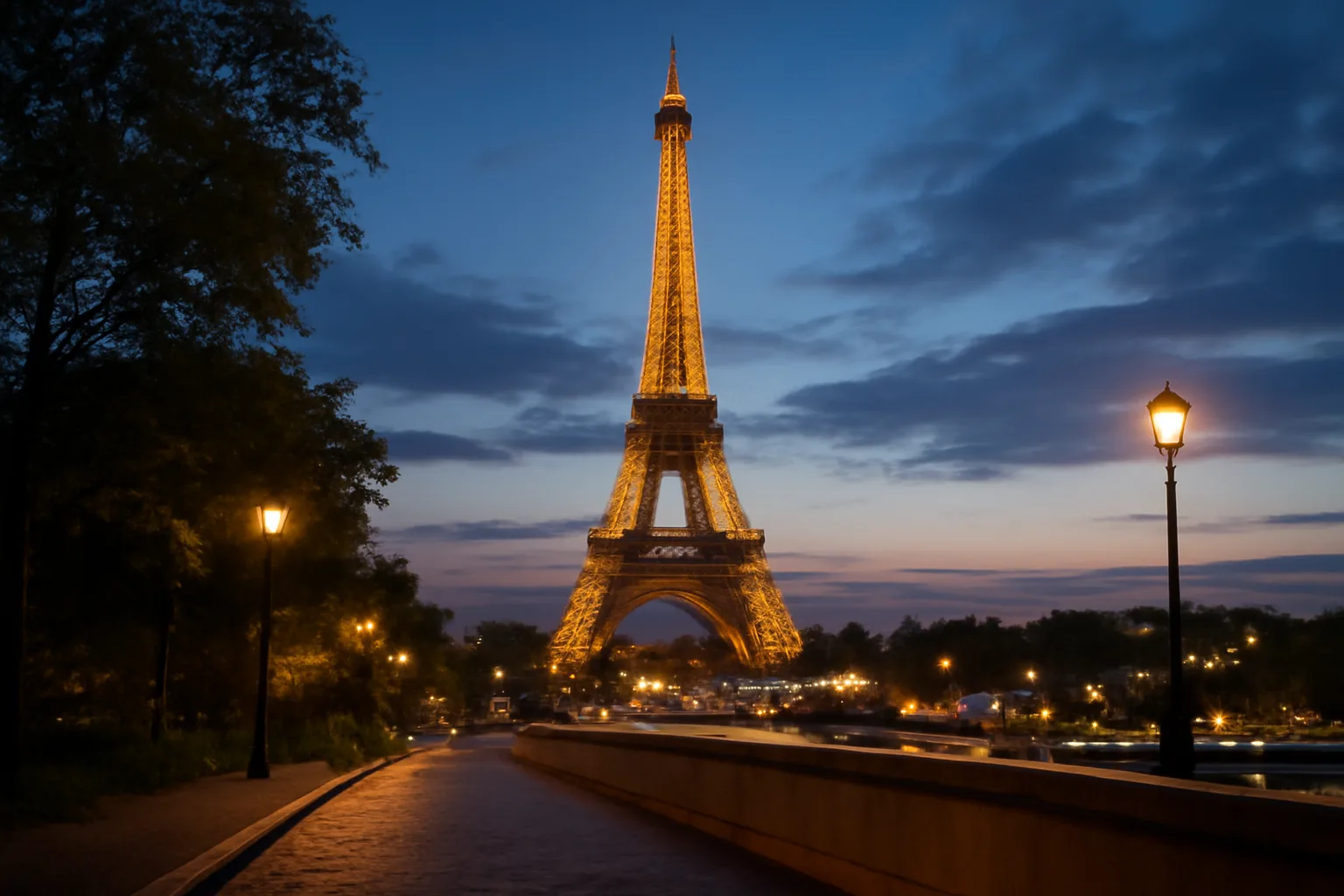
Looking for the best way to photograph the Eiffel Tower without joining the thousand-person queue at Trocadéro? The 8 secret spots for the best Eiffel Tower photos (including night views) will teach you where to stand, when to shoot, and which lens to grab. I’ll guide you through hidden lanes, iron arches and rooftop panoramas. Expect precise angles, timing for the famous sparkle, and a few local tips that save time — and your photos.
Trocadéro Esplanade — reinvent the classic
Why it still matters
Trocadéro remains irresistible. From its wide terrace you get the Tower centered, dramatic, and framed by fountains. It’s touristy, yes, but the view is unbeatable at sunrise. Arrive before dawn and the golden light softens the iron lattice. With long exposure, the fountains melt into glass.
How to shoot
Use a 35–70mm lens for a balanced composition. A small tripod helps for long exposures. For night shots, catch the first sparkle at dusk. The Tower sparkles for five minutes on the hour after sunset. Check official times on the Eiffel Tower site before you plan: toureiffel.paris.
Pont de Bir-Hakeim — symmetry and motion
Why it works
This bridge offers a cinematic tunnel of iron arches with the Tower perfectly aligned at the end. It’s favorite for fashion shoots and car-pop motion blur. The elevated metro line gives a strong leading line that pulls the eye directly to the Eiffel Tower.
How to shoot
A 24–50mm lens captures both arch and distant Tower. Stand in the middle of the walkway for symmetrical framing. For night views, time the shutter for passing headlights to create light trails. Respect local safety and step out of traffic lanes quickly — Parisians expect speed.
Rue de l’Université — quintessential Paris street
Why it works
This narrow street delivers a postcard Paris moment: Haussmann facades, wrought-iron balconies, and the Tower peeking at the end. It’s intimate. The scale of the buildings forces the eye along the street toward the iron spire. You’ll get a sense of the city around the monument.
How to shoot
A 50mm or short telephoto compresses the scene, making the tower loom. Shoot from the middle of the street for perfect perspective. Dawn or blue hour gives a moody sky and emptier sidewalks. Be mindful of residents and avoid blocking entrances.
Avenue de Camoëns — a secret garden frame
Why it works
Tucked behind private houses, this little garden offers a window-like opening that frames the Eiffel Tower with greenery. It’s poetic, slightly clandestine, and much quieter than nearby squares. The framing turns the Tower into a postcard inside a postcard.
How to shoot
Use a 35–85mm lens to choose how much foreground you include. Low angles emphasize the frame. Late afternoon light filters through the trees with a warm tint. This is a place for thoughtful compositions, not wide-angle panoramas.
Square Rapp — ornate façade meets iron skeleton
Why it works
Square Rapp is a small plaza where Art Nouveau architecture frames the Eiffel Tower like a jewel. The ornate balcony and sculpted stone create a strong foreground. Photographers love the contrast between decorative masonry and industrial lattice.
How to shoot
A 35–85mm lens is ideal. Focus on the details in the facade while keeping the Tower sharp in the background. Afternoon light highlights the stonework. Be discreet: this is a residential area and locals appreciate calm.
Quai Branly terraces — close-up and reflections
Why it works
The terraces around the Musée du Quai Branly provide close proximity to the Tower’s base. Low vantage points, reflecting pools, and modern glass surfaces yield creative reflections and abstract frames. At night, water and glass complement the illuminated iron.
How to shoot
Bring a wide-angle lens for dramatic foregrounds and a tele for compressed intimate shots. For night views, expose for highlights to keep the Tower’s lights crisp. Respect museum opening hours and check access for terraces after dark.
Champ de Mars near École Militaire — leading lines and scale
Why it works
From the far end of Champ de Mars the long lawn provides perfect leading lines. The École Militaire anchors the opposite end, giving a classical symmetry. This is the place for grand compositions that show the Tower in its city context.
How to shoot
A 24–70mm lens covers from wide groups to tighter portraits. Dawn is best for soft sky and empty lawns. For night panoramas, use a tripod and bracket exposures. If you’re photographing people, the lawn offers space for creative foreground subjects.
Montparnasse Tower observation deck — the skyline storyteller
Why it works
For a panorama that places the Eiffel Tower within Paris, choose Montparnasse. From the observation deck you get a high, unobstructed view of the whole city. The Tower becomes a character among rooftops, not the only actor.
How to shoot
Bring a moderate telephoto to isolate the Tower against a sea of Haussmann roofs. Blue hour and into the early night are spectacular. The city lights and the Tower’s sparkle make a dramatic contrast. For logistics, check opening times and tickets at the official site: tourmontparnasse56.com.
Practical tips for night photography and etiquette
Night shots can make the Eiffel Tower mythical. The sparkles occur for five minutes every hour after sunset. Scout your spot in daylight to avoid surprises. Use high ISO sensibly and a steady support for long exposures. If you bring a tripod, expect to fold it in crowded places and watch out for police rules near monuments. Be respectful of residents and security cordons. Finally, try multiple compositions: include foregrounds, reflections, or people to tell a story beyond the Tower itself.
Leave a Reply