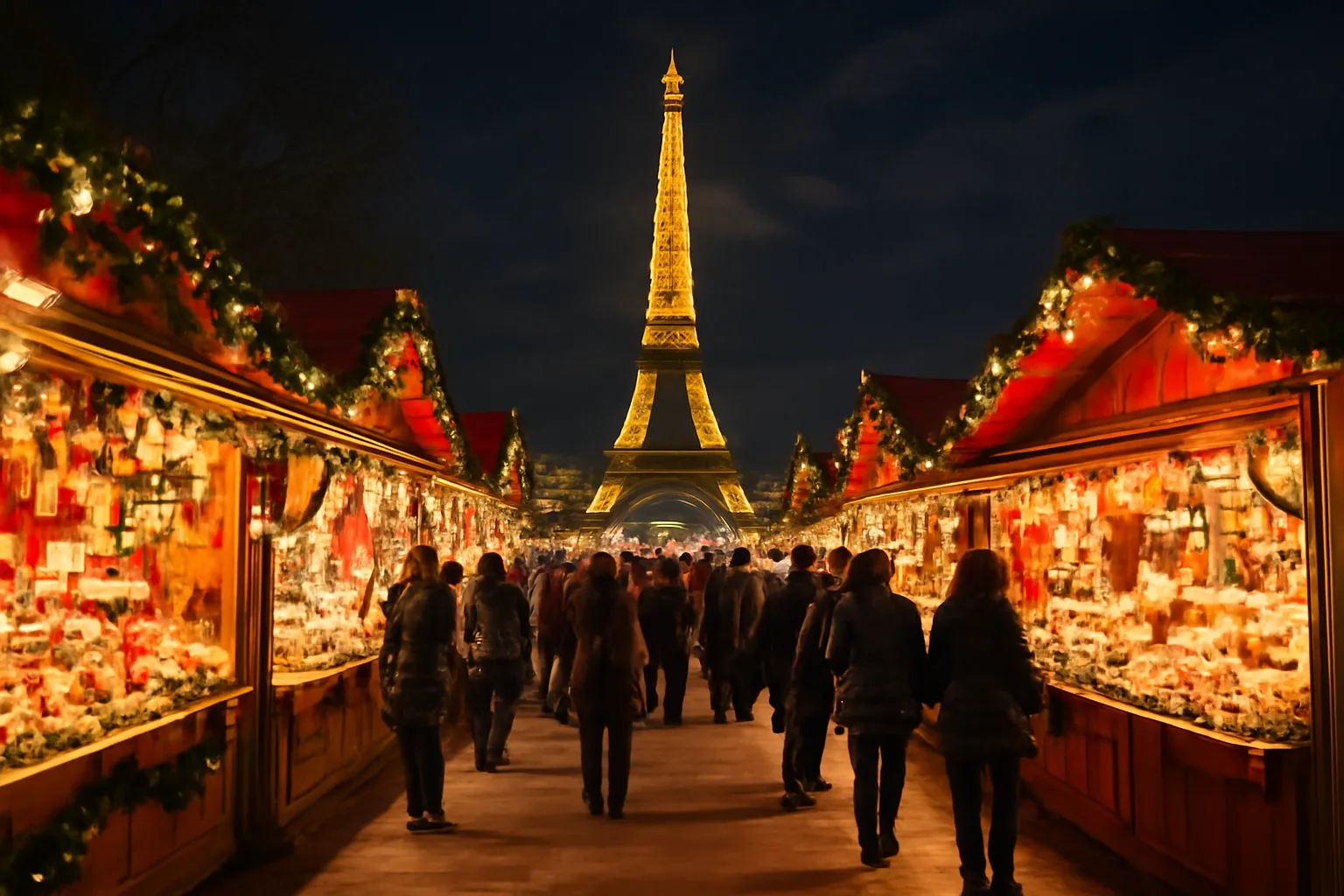
Can a city that invented the café terrace still surprise you at Christmas? Paris’ 2025 Christmas markets will. In this guide you’ll find where to go, what to taste, and how to move between festive villages without losing time. Expect practical schedules, shopping tips, and a few secrets only a local would share. Read on to plan a route that mixes light displays, artisan stalls and the best vin chaud in the city.
What’s new for Paris’ 2025 Christmas markets
This season brings a clearer focus on quality over quantity. Organisers have pushed for more curated stalls and fewer mass-produced souvenirs. Look for stronger rules on packaging and less plastic on market stands. That means gifts that feel authentic and less waste in your suitcase.
City authorities also continue to test new locations beyond the traditional squares. Expect creative backdrops for the festive lights and pop-up events near cultural hotspots. Some markets pair their offerings with small concerts or themed workshops. These additions make each market feel like a short festival, not just a row of stalls.
If you want official dates and programming, consult the Paris tourism site for updates and confirmed lists: Paris Convention and Visitors Bureau. For the large-scale village that often dominates headlines, check La Défense’s official page for hours and special events: La Défense.
Top markets to visit and what makes each special
Paris’ markets have distinct personalities. Choose one for lights, another for food, and a third for artisanal gifts. Below are the highlights to build a sensible route across the city.
La Défense: the big festive village
La Défense traditionally hosts one of the largest winter markets in and around Paris. Here you’ll find long rows of cabins selling regional food, hand-crafted items and larger festive installations. It’s ideal for visitors who like scale and variety. Expect lively crowds late afternoons and early evenings. If you crave a wide selection of artisanal cheeses, cured meats and decorative goods, plan at least two hours. The giant Christmas tree and illuminated sculptures also make La Défense a good choice for families and photographers.
Saint-Germain-des-Prés and the Left Bank
The Left Bank markets trade glamour for intimacy. Small stalls cluster near galleries and independent shops. The atmosphere is quieter and classically Parisian. You’ll discover small ateliers selling ceramics, fine chocolate and leather goods. This is the place to buy a unique gift and then step into a nearby café to warm up with a café noisette. Saint-Germain’s mix of culture and cuisine keeps the vibe refined and relaxed.
Montmartre and Abbesses: lights on the hill
Montmartre turns especially charming at Christmastime. Cobbled streets, small squares and views over the city create a cinematic scene. Market stalls here often feature local artists and handmade jewellery. After browsing, climb a few steps for a view of Paris lights. Evening visits are magical but colder; layer up and take your time between stalls. Montmartre’s market is small, friendly, and perfect for a romantic stroll.
Hôtel de Ville and central festive pop-ups
Close to the heart of Paris, areas around Hôtel de Ville and other central squares host pop-up markets with seasonal food stands and craft vendors. These sites often pair market stalls with temporary exhibitions or an ice rink. They offer convenience if you are sightseeing nearby. Timing matters: weekdays are calm, while weekend evenings fill fast with locals and tourists alike.
What to eat, drink and buy at the markets
Food is the real headline at Parisian markets. Taste is how Parisians judge a market’s quality. First, find the vin chaud. Served hot and spiced, it’s the seasonal glue between stalls. Look for versions made with real red wine and citrus, not overly sweet mixes.
Street vendors also sell roasted chestnuts, crêpes, and waffles. If you want heartier fare, search for raclette or tartiflette stands. Fresh oysters on the half-shell appear at more upscale stalls. Sweets include gourmet chocolate, candied nuts and regional pastries.
For gifts, prioritise handcrafted goods: wooden toys, hand-blown glass, local preserves, and small leather goods. Ask the maker about materials and origin. Buying direct supports the artisan and gives you a story to tell at home.
Pay attention to payment methods. Many stalls accept cards, but smaller artisans may prefer cash. Carry some euros just in case. Also consider sustainable choices: choose items with minimal packaging and look for stalls that use compostable cups and bags.
Practical tips: timing, transport and crowds
Timing is everything. Visit on weekday mornings for calm browsing. Late afternoons offer the best light for photos but bring bigger crowds. If you want the illuminated nights, go late and reserve extra time for queues.
Use public transport. The RATP network links most market locations. For schedules and fast route planning, consult the official transit site: RATP. Avoid driving; parking is scarce near popular markets.
Keep an eye on opening dates and hours. Markets typically run from late November through December, with some events stretching into early January. Special attractions like ice rinks or concerts may require advance booking. Check information pages before you go.
Stay safe and travel light. Pickpockets favour crowded festive spots. Carry a secure bag and keep valuables out of sight. Wear comfortable shoes: cobbles and cold evenings are a common combo in old Parisian squares.
Booking, budgets and sustainable choices
Most markets are free to enter. You’ll pay for food, craft items, and special attractions. Expect modest prices for snacks and higher costs for quality artisan goods. If you plan an evening with ice skating or a special concert, buy tickets early to avoid sold-out disappointments.
Sustainability has become a stronger theme in 2025. Many markets now ban single-use plastics and favour local producers. Look for stalls advertising organic, seasonal or locally-sourced products. Bringing a reusable bag or travel mug reduces waste. If you want to shop responsibly, ask where items were made and how they were packed.
Finally, keep receipts. If you’re buying gifts for export, sellers can guide you through VAT refund procedures when relevant. For lengthy stays, consider spreading visits across several markets to compare goods and prices. That way you’ll find the best vin chaud, the perfect wooden toy, and a few quiet moments in the city’s winter glow.
Wandering through the markets is part of Paris itself. Let curiosity lead. Taste slowly, walk deliberately, and let the lights do the rest.
Leave a Reply