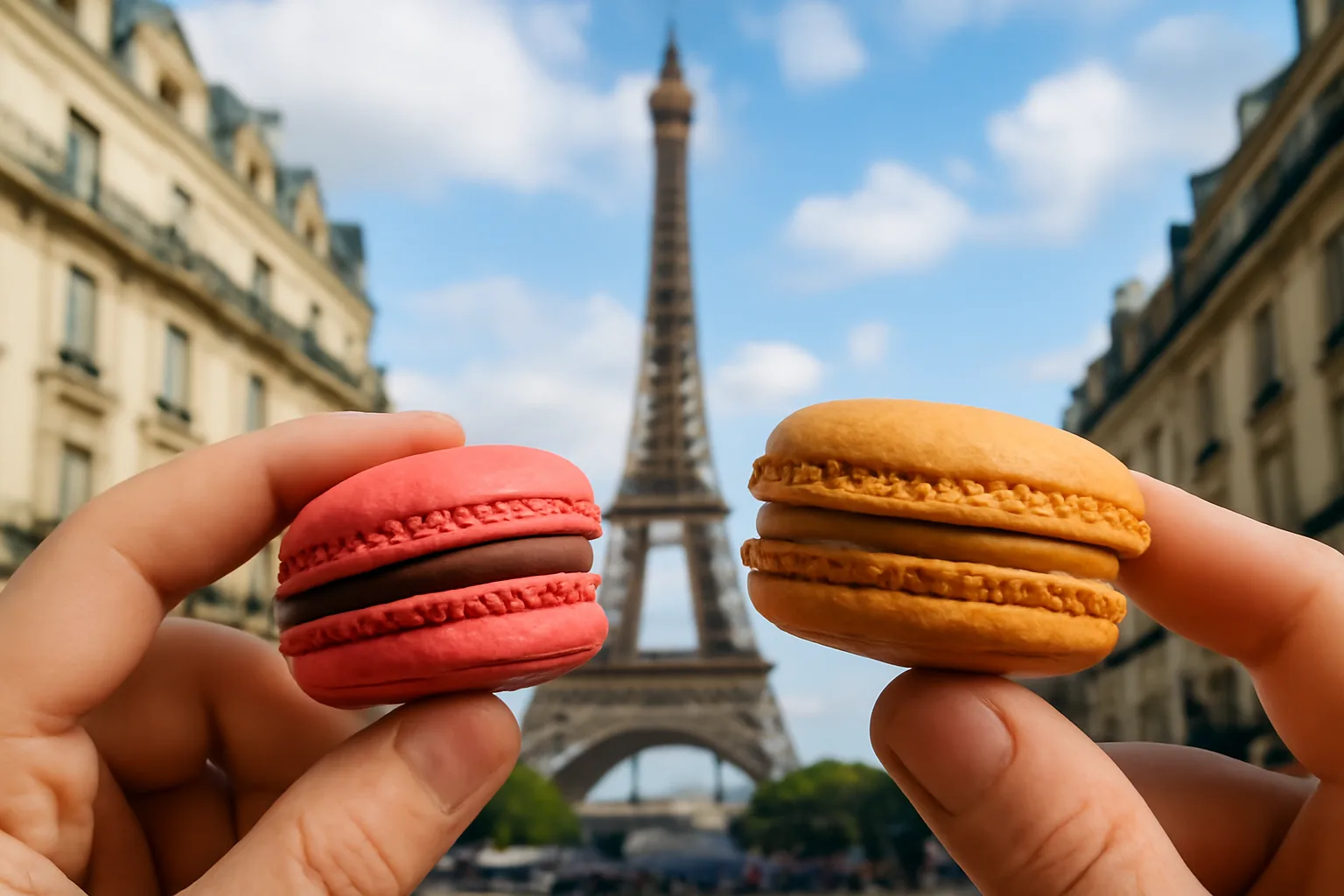
Ladurée vs. Pierre Hermé: where to find the best macarons in Paris — have you ever wondered which house truly deserves the crown? In this city of taste, that question sparks debates at cafés and kitchens alike. I’ll guide you through the history, the technique, the flavours and the best places to buy. By the end, you’ll know where to walk, what to sample and how to judge a macaron like a local.
A Parisian rivalry steeped in pastry history
The story of the macaron in Paris is both simple and endlessly layered. The almond cookie arrived in French monasteries centuries ago and evolved into the two-shell, ganache-filled jewel we now cherish. That evolution brought names to the fore. Ladurée built an empire on Belle Époque charm. Its salons and pastel boxes turned macarons into a ritual. Pierre Hermé arrived later, as a chocolatier turned visionary pastry chef, reshaping the macaron into a playground of ingredients and textures.
The rivalry is not a feud. It is a conversation between tradition and invention. Locals argue in small, earnest voices; tourists bring home boxes that become souvenirs and mood boosters. Each house tells a different story. Each box opens like a chapter. And both have earned their place in Parisian life.
What makes a macaron great: shell, ganache, balance
Before picking a favourite, you need to know what to judge. A top macaron stands on three pillars. First, the shell must be crisp outside and tender inside. It should crack with a gentle sound, not crumble into dust. Second, the filling must be fresh and well-suited to the shell. A heavy cream can overpower a delicate biscuit. Third, the balance of sweetness, acidity and texture is crucial. Complexity without confusion wins.
Taste is personal, but technique is objective. Temperature, ageing of ingredients, and the hydration of almond flour all change the result. You will notice differences between two shells from two houses. One may present a perfect symphony. The other may be a bold experiment. Both can be excellent. Knowing the mechanics sharpens your palate and makes your tasting more fun.
Ladurée: decorators of taste and ritual
Step into a Ladurée salon and you feel history around you. The décor is pastel, gilded and resolutely Parisian. The brand turned the macaron into a cultural icon. Their classics—salted caramel, rose, pistachio, and chocolate—are standards of consistency. Expect balanced sweetness, subtle flavours and the reassuring uniformity of a product perfected over decades.
Ladurée’s strength lies in ritual. The packaging matters. The boxes are a souvenir. The cafés invite you to slow down. For families and first-time visitors, Ladurée provides a friendly, reliable introduction to the macaron. If you want that classic Paris postcard experience, you will not be disappointed. The house excels at comfort and elegance rather than shocking the palate.
Pierre Hermé: the alchemist of flavour
Pierre Hermé approaches the macaron as a lab. He experiments with acidities, spices, and unusual pairings. Think rose and lychee, olive oil and roasted pistachio, or passion fruit with chocolate. The textures can be more varied. The fillings are often lighter, brighter, sometimes provocatively sour. Hermé’s macarons ask questions of your palate. They do not simply please; they challenge.
Hermé is beloved for his creativity and precision. Each limited edition or seasonal release is a small event. Connoisseurs chase the Ispahan (rose, lychee, raspberry) as if it were a performance. The packaging is modern, the boutiques sleek. For those who revel in novelty, Pierre Hermé feels like discovery with every bite.
Where to buy depending on your mood and budget
Your choice between Ladurée and Pierre Hermé can depend on mood, companions, and wallet. If you are gifting someone or making a romantic gesture, Ladurée’s boxes carry a theater all by themselves. They are visible, iconic, and often more abundant in tourist areas. Prices are fair for the experience, though not the cheapest in town.
If you seek a tasting experience, want to surprise your palate, or chase seasonal rarities, Pierre Hermé is worth the detour. His boutiques are fewer and often found in shopping districts and near landmarks. Expect slightly higher prices for some flavours, but also smaller runs and more daring combinations. For budget-minded explorers, look for local pâtisseries that make outstanding macarons at lower price points. Paris is full of talented artisans beyond the two giants.
Tips for transporting and tasting macarons in Paris
Two boxes can survive a metro ride. But a ruined macaron is a sad thing. Always carry your box flat and avoid direct heat. If you plan to picnic, keep them shaded and eat within a day for optimal texture. In winter they travel better; in summer refrigeration helps but can mute aromas. Allow chilled macarons to warm a few minutes before tasting.
Tasting order matters. Start with the milder flavours—vanilla or pistachio—then move to tart or intense ones. Cleanse your palate with water or plain bread between bites. Don’t rush. Let each macaron rest on your tongue. Note the shell’s snap, the filling’s density, and the aftertaste. Make mental notes. That way, your comparison between Ladurée and Pierre Hermé will be precise and, if necessary, entertaining in hindsight.
Final thoughts for your macaron hunt
Choosing a winner in the Ladurée vs. Pierre Hermé debate is less about a single answer and more about what you want from the experience. Do you want the comfort of a classic, beautifully packaged treat? Choose Ladurée. Do you crave an inventive, surprising flavour journey? Walk into Pierre Hermé. Either way, you will taste the craft and care that make Paris a global pastry capital.
If you’d like precise addresses or a tasting route through the city, I can sketch a half-day plan that includes boutique stops and a café to sit and judge in peace. After all, macarons are meant to be shared—and discussed—over good company and better coffee.
Leave a Reply